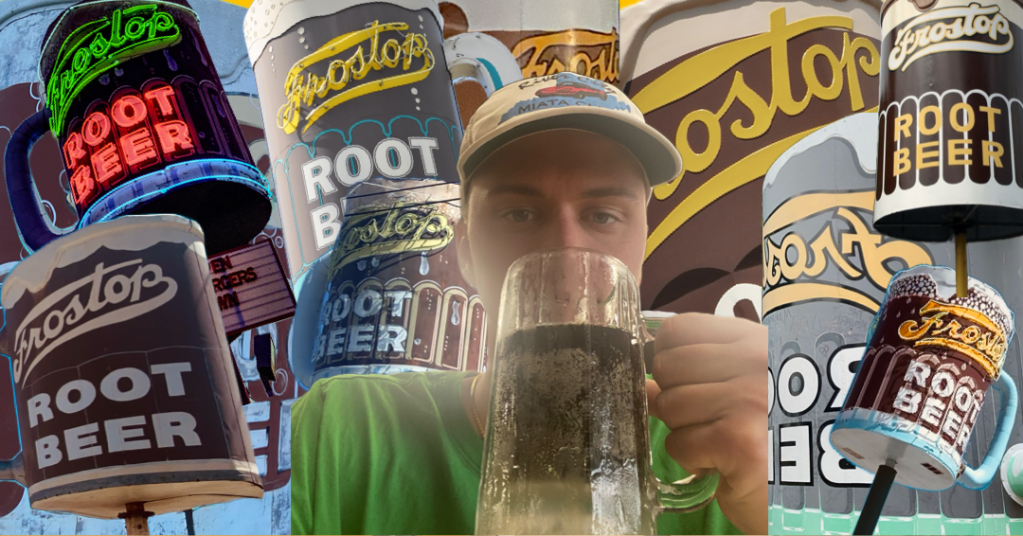
Last year I visited countless national parks and had one unexpected obsession: Frostop, an endangered mid-century drive-in restaurant whose remaining locations acted as my map across the country.
If you’re not from Louisiana, Mississippi, West Virginia, or rural Illinois and Idaho, there’s a good chance that the name ‘Frostop’ means nothing to you. But imagine a time when roadside drive-ins dotted the American landscape, each with its own character, from glowing neon signs to giant rooftop mugs of root beer. For locals, Frostop’s towering mugs became more than just advertisements—they were landmarks, a piece of their hometown identity, much like the corner diner or the mom-and-pop burger stand that once defined small-town America.
I grew up two minutes away from my local Frostop, and would pass by it every day on the way to school. It wasn’t until high school when my friends and I could drive that Frostop became a central hangout place.
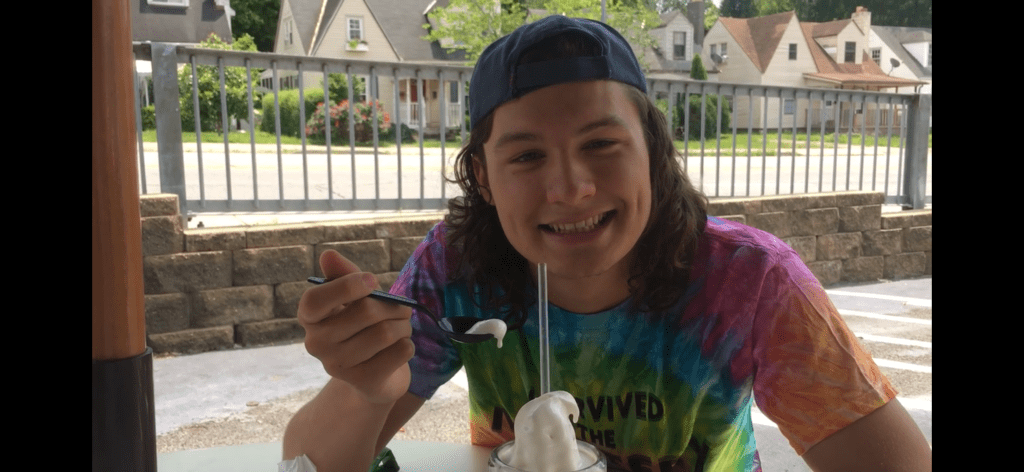
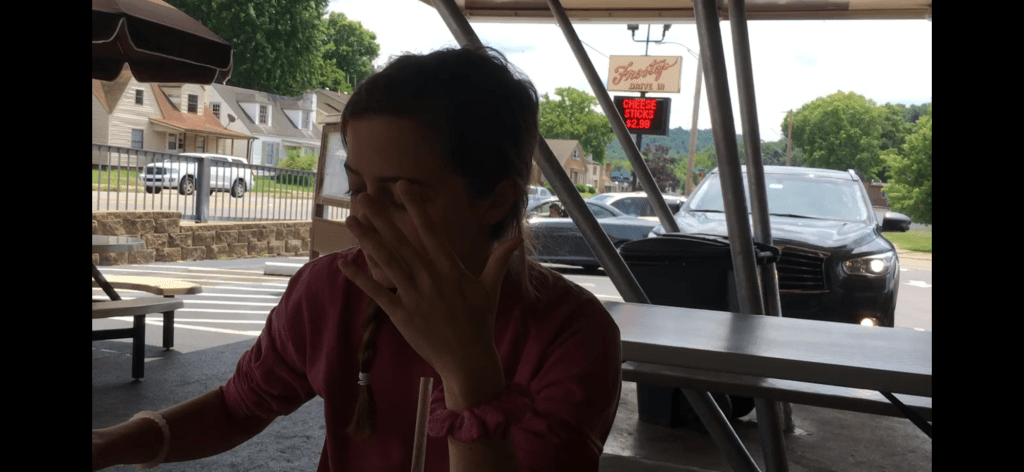


For 20+ years I was under the impression that the spinning mug was one of a kind. However, while on a trip to Michigan in 2020 I stumbled upon bottled Frostop Root Beer in a soda shop, which led me to discover that there were actually 13 Frostops around the country. My adventure always had a goal destination of Alaska, but I prioritized my itinerary around each Frostop location which is why my long road North began by heading South to Mississippi and Louisiana. I have since learned that maintaining the legacy of a near century-old (now defunct) franchise has come with its share of challenges.
In 1926, the first Frostop opened its windows in Springfield, Ohio. When WW2 ended it brought an end to gas rationing and the drive-in concept boomed. By 1960 there were over 350 locations. The specialty was then as it is now: Root Beer. This concept was the predecessor to modern day fast food. McDonald’s opened their first store in 1955, which is one year after Riggen’s Frostop in Chrisman, IL (the oldest remaining, unmoved location).

When I started planning my trip, there were only ten remaining Frostops. Even Frostop’s own website has been unable to keep up with the closures, which speaks to the disconnect of the former franchises and the current bottling company. The franchise fell apart some 45 years ago and each Frostop location became their own institution. Each gained autonomy but lost the standardized regulations that hold modern franchises together.
FBG (Frostop Bottling Group) got involved years later to start selling bottled Frostop Root Beer in hardware stores all around the country. They also manage the Frostop website. They largely revived the brand in places where there hasn’t been a Frostop location for decades. When I reached out to FBG, I expected them to have a vested interest in the stores and perhaps be the thread connecting all of the far off locations, but there was a general lack of interest for the remaining restaurants. They don’t seem to care that those stores are the living heart of their brand.
The lack of oversight for these restaurants has pros and cons. To their benefit, the drive-ins contain unique menu items. For instance, when you’re in New Orleans you can enjoy an area specific shrimp po-boy or a crab burger. Yet the downside is considerable: multiple locations no longer even serve Frostop Root Beer. Some shamelessly serve Barq’s Root Beer right out of a tap. Others use the syrup from the Frostop Bottling Group, but a few have still been able to brew theirs in house, which results in the best version of the classic product. My disappointment at seeing Barq’s was probably written all over my face, but I can’t fully blame the owners. The owner in Picayune, MS had reportedly reached out to another location to get tips on how to brew and pressurize their batch but couldn’t afford it. Other locations seemed more complacent.
Frostop’s story mirrors that of many small-town gems, caught between preserving tradition and adapting to a world dominated by convenience. The decline of traditional drive-ins reflects a broader trend: as technology and convenience pull us further from human connection, American cities lose their individuality, morphing year after year into a homogenous landscape of chain stores and franchises.
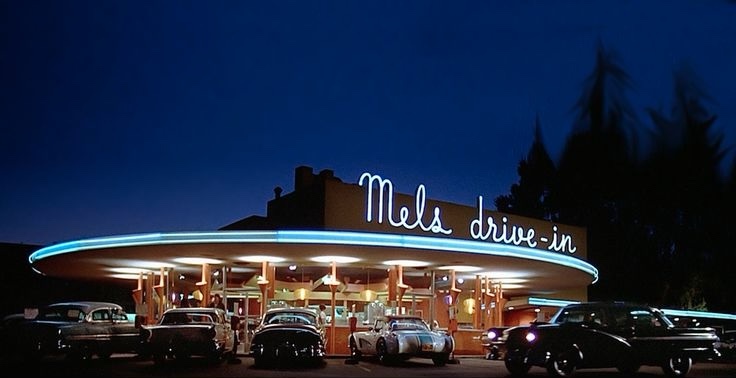
The shift from classic drive-ins to fast-food chains like McDonald’s was driven by the desire for quicker service. This emphasis on speed eventually led to the drive-thru usurping the drive-in in the 1970s. Now in 2025, you don’t even need to leave your house. A series of taps on a glass screen, and Taco Bell will be delivered to your front door. Oh, and don’t forget to select the option for the driver to leave your order at the door—no ringing the bell, no small talk—so you can dive right back into binging The Office without a single human interaction. I have certainly succumbed to the temptations of this convenience, yet it is nevertheless the type of behavior that has contributed to 340 Frostop locations closing their doors in the past 50 years.
You could blame Frostop for not adapting, not scaling, and being tech resistant. But would you point at a vinyl record and ask “Why aren’t you an MP3?” Sure, Frostop could have become Sonic (perhaps the best example of a drive-in that scaled and adapted), but if every company took the approach of bigger and faster, then we are in the fast lane to a WALL-E dystopian reality.

Frostop is just one of countless drive-in brands that used to define small-town America—every town had one. But imagine if they didn’t. And yeah, maybe that’s the most ‘red-blooded American’ thing I’ve ever said, wondering, “What if mom-and-pop burgers and fries disappeared?” The thing is, the price gap that once made drive-ins seem indulgent compared to McDonald’s has practically vanished. McDonald’s prices have climbed nearly 40% in the past five years, while your local drive-in still delivers that classic experience.
So, next time your craving hits (we all get them), and you’re not in a rush, why not roll up to your local drive-in? It’s more than a meal—it’s a bite of history. It’s where our grandparents went after high school football games, where your parents grabbed shakes on first dates. These places don’t just serve food; they serve stories. And if we lose them, we lose a part of what makes our towns ours. Afterward, throw on a vinyl, catch a movie at a theater instead of streaming, or just soak in the quirks of your town. Next time let your burger come with a side of nostalgia. These are the little things that make your hometown unique—and they’re worth holding onto.
After literally driving coast to coast, I have visited every Frostop location. Here are my reviews for any travelers that might be tempted to trace my steps. Of note, there are several things I find crucial to a Frostop: the homemade root beer, the iconic landmark Mug, the vintage aesthetic, and of course, the food. I’ll be rating each one in the order of my visits and grading them on a 5-mug scale.
Pasquale’s Frostop, Greenville,Mississippi


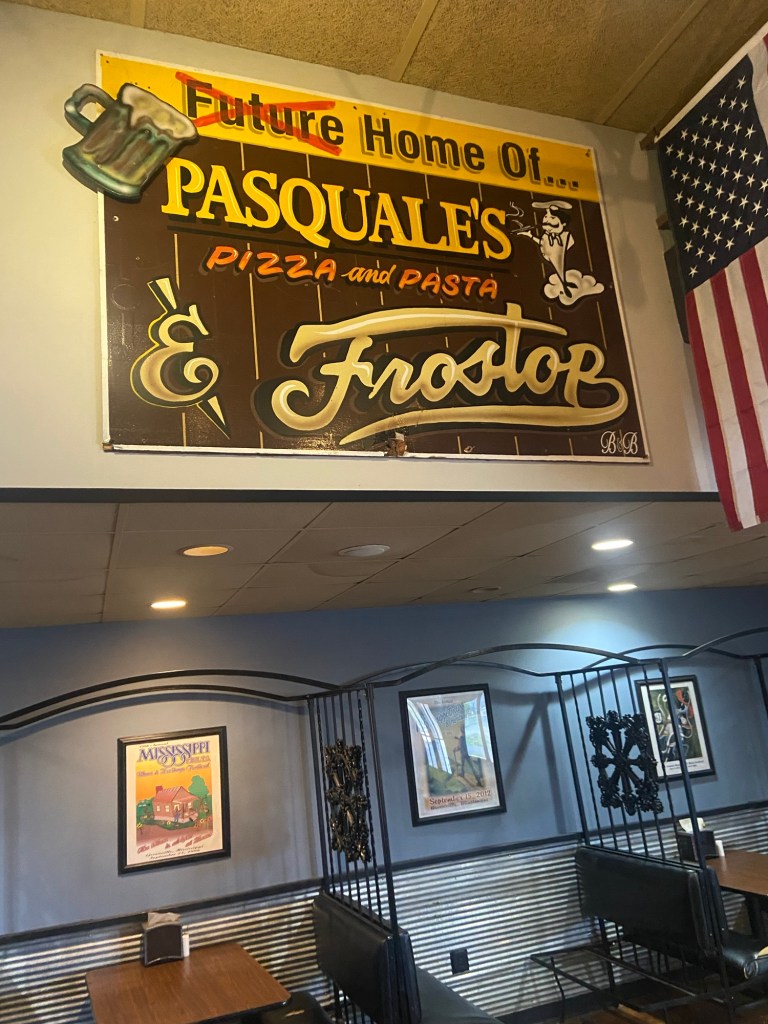
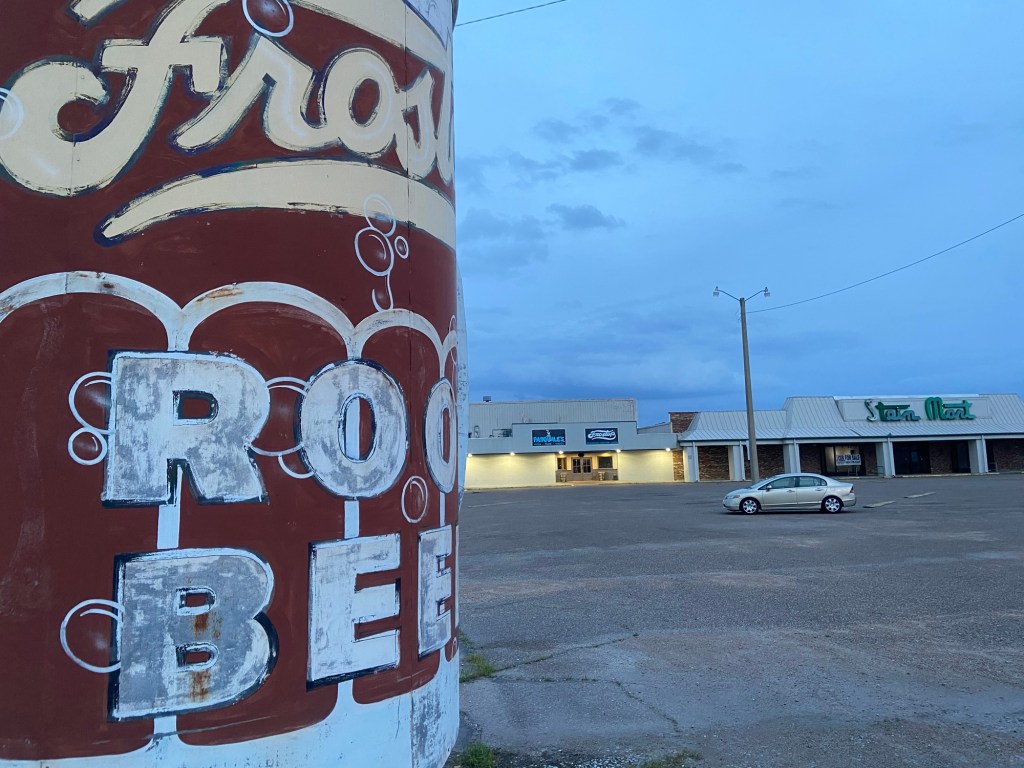
We begin with possibly the least frostoppy Frostop. This location doubles as a pizza place in an abandoned strip mall. They had a mug and Frostop branded root beer dispensed from a soda machine. A set-up like this means they are buying the syrup from the bottling group. (Syrup is significantly better than Barqs, but not as good as home brewed.) They had figured out a drive-thru, but the building had none of the 1960s flare that most locations have managed to retain. When you become pizza AND pasta AND Frostop you’ve spread yourself too thin and you’re barely a Frostop anymore.
Frostop of Picayune, Picayune, Mississippi

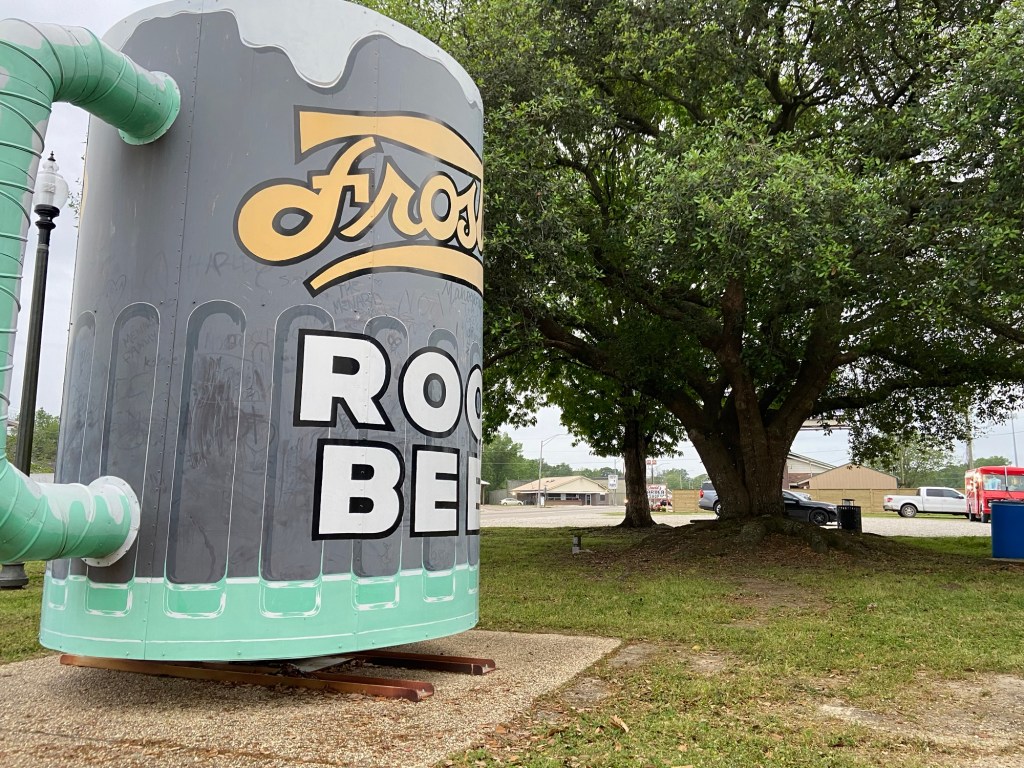
Our first example of a Barq’s Root Beer location. I have some sympathy for this specific location because they have reached out to other Frostops for advice on how to home brew, but they just can’t afford to do it. This spot had a unique menu with an extensive Po-Boy selection. They didn’t have the Frostop mug on their premises because it was across the street at the city’s visitor center, a testament to how important this place is to the locals.
Buddy’s Frostop, Destrehan, Louisiana


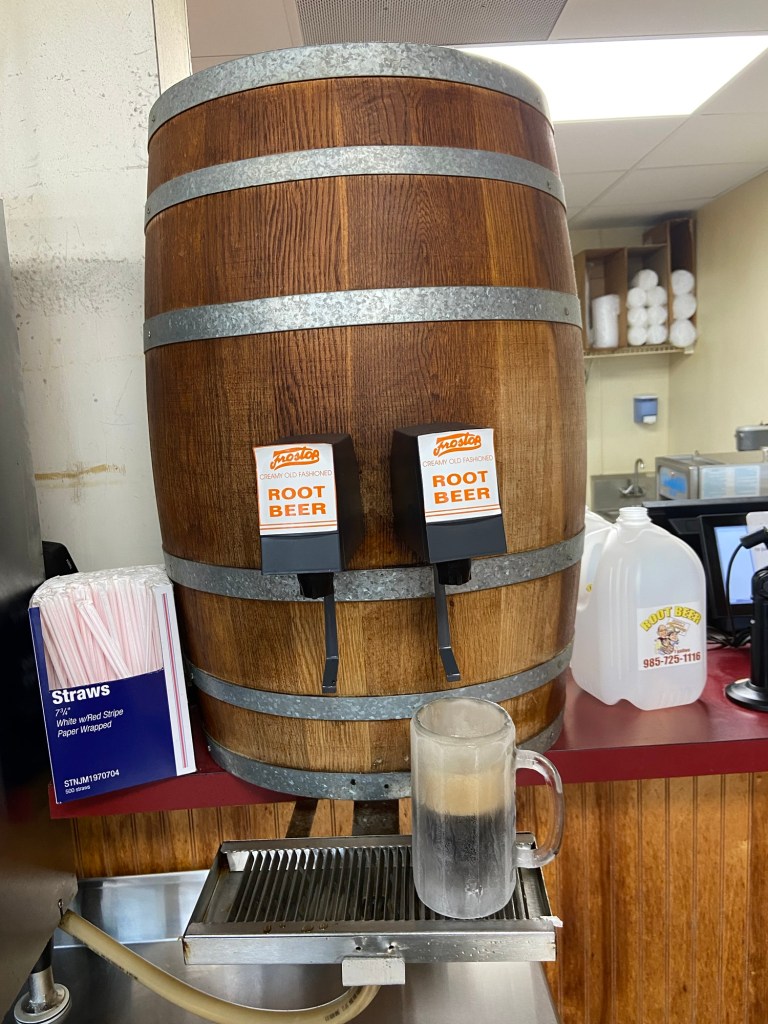
Here was my first taste of authentically home brewed root beer. Buddy had gone to great lengths to get approval for a miniature Frostop mug to sit on top of their building in the shopping plaza. The root beer was actually distributed out of barrel tap and served in a frozen mug. I learned a couple days later that the barrel method indicated it was home brewed. Everything felt very genuine about this location except it was attached to other buildings and had lost the charm of being a drive-in. Before they were approved to put the mug on the roof, the owner had the mug on a trailer that they would move around the parking lot to avoid getting in trouble.
Ted’s Frostop, New Orleans, Louisiana

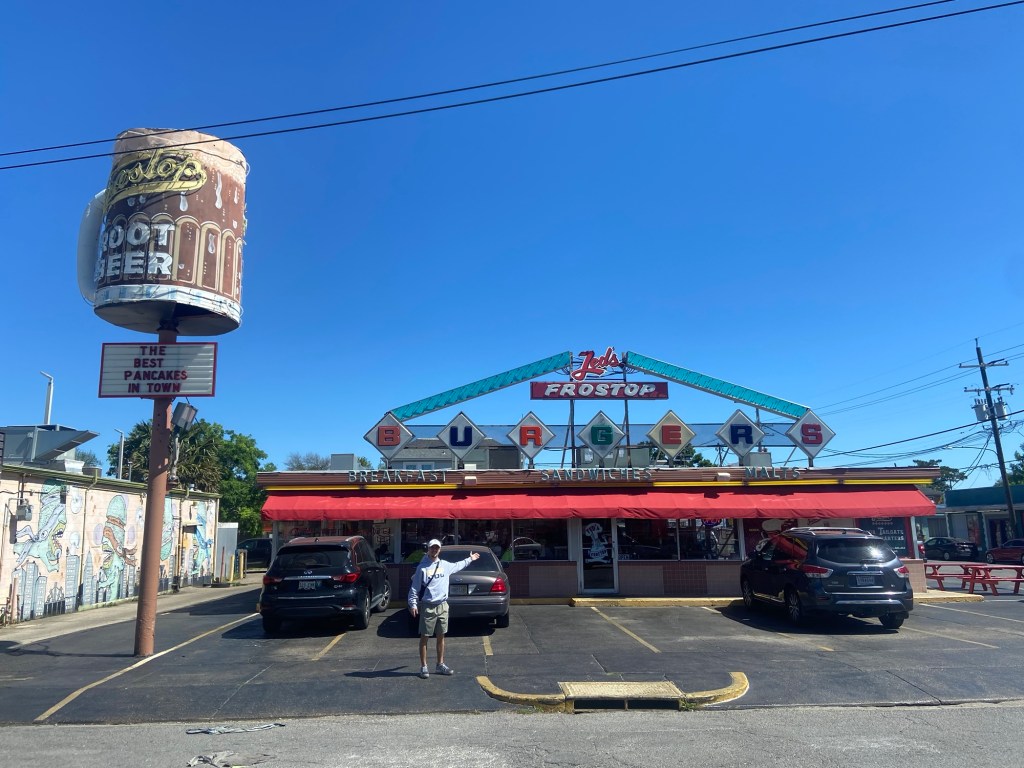

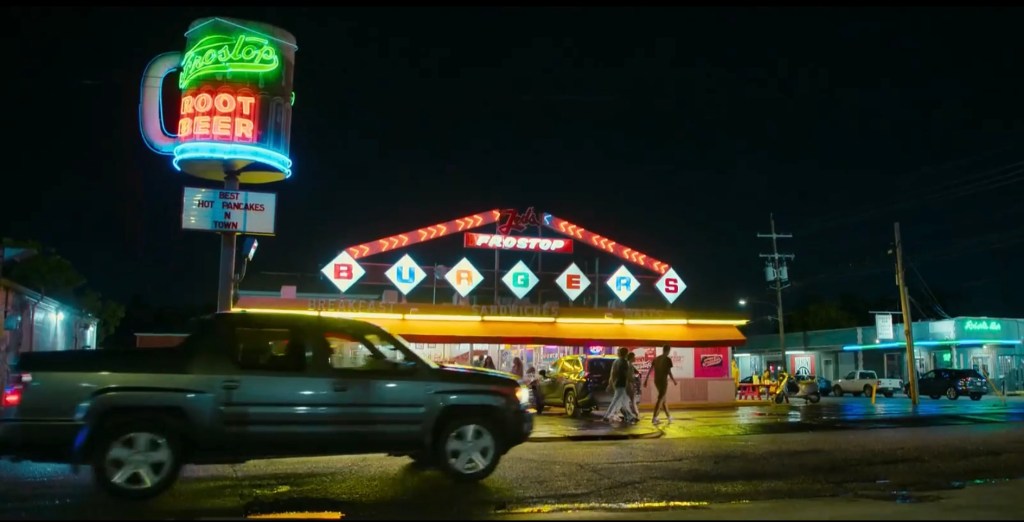
This might be the most viral Frostop. Aside from being in a very populated area, I was very surprised to see this Frostop featured in the popular Netflix movie, “Hit Man”. The drive-in was the backdrop for an integral scene and even had callback references later in the film. I felt like a proud dad watching that and knowing Frostop stock would get a bump. The only drawback was that the root beer was out of a fountain which indicates using the bottling company’s syrup. When Hurricane Sandy came through New Orleans it actually knocked down their mug, and it landed upsidedown. They kept it like that for close to a decade, even selling merchandise with the upsidedown mug.

Frostop Clearview, Metairie, Louisiana

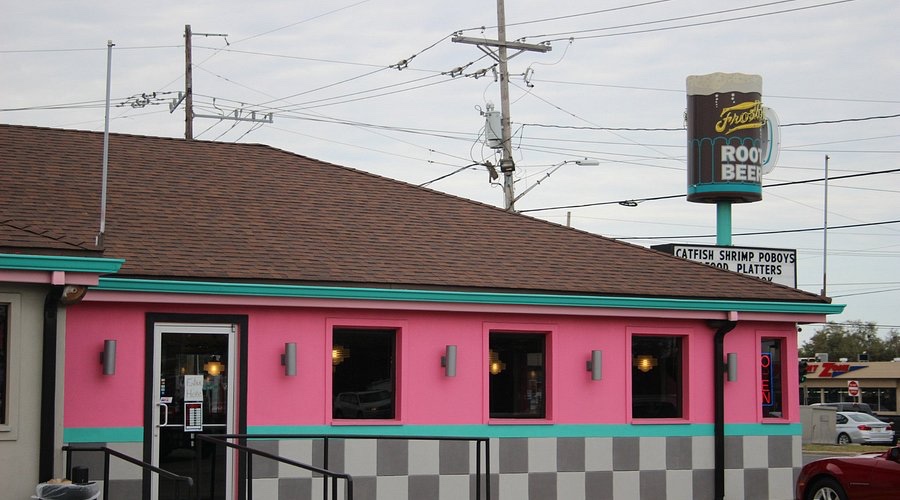
I’m not sure there was another location that had invested so much money and effort into recreating the aesthetic of a 70s diner. Dave and Nancy owned this location for the past 16 years, and they were the ones that gave me the scoop on other regional locations. They went above and beyond to homebrew their root beer. I was sad to see upon writing this that this location had permanently closed in August. It is the fourth Frostop to close in the last four years: locations in Thibodeaux, LA, Tell City, IN, and St. George’s, UT also poured their last glass. I visited these three closed locations. Two had been replaced by chains. I really admire Dave and Nancy for bringing this place to life and keeping it open as long as they did. They had the giant mug looking like brand new and good food to boot.
LaPlace Frostop, LaPlace, Louisiana
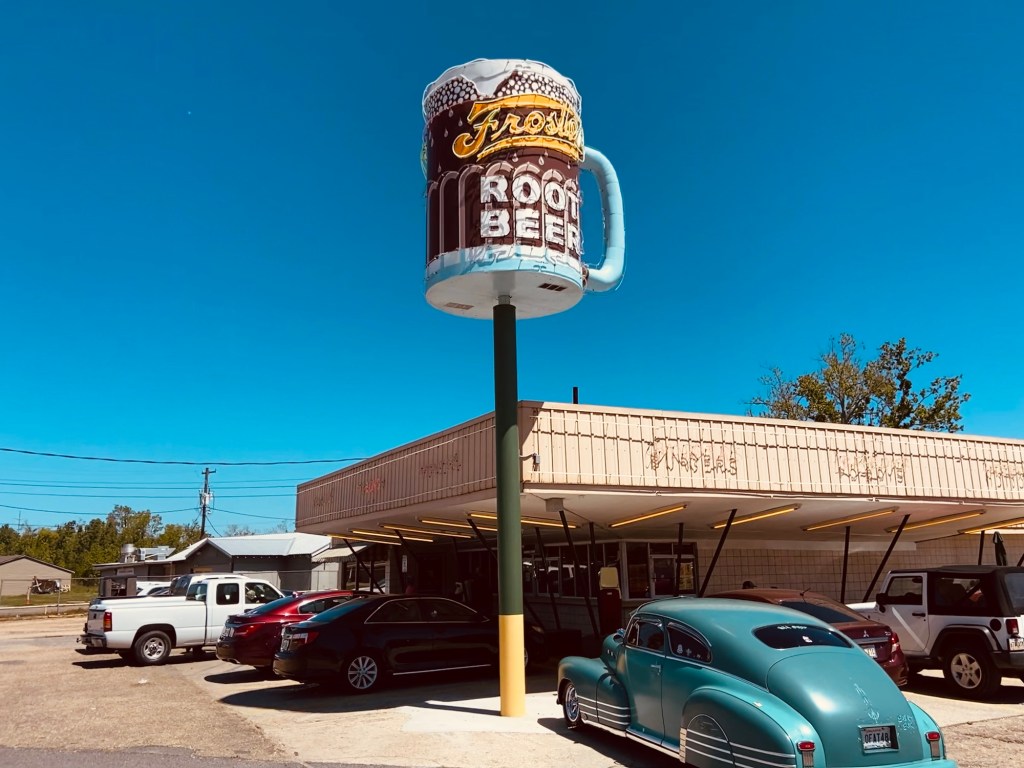
LaPlace has the nicest building of the ten Frostops. It had a spinning mug and maintained the drive-in look without doing car service. It was the first spinning mug I’d seen since Huntington, WV. This was a very popular location and hosted an occasional classic car show. The root beer was coming out of a soda machine, but the employees told me it was homemade. These seemed like conflicting claims, but maybe they’d figured out how to make that work. Or maybe it was easier to tell a random customer that it was homemade instead of getting into their purchasing agreements from the root beer distributor. Probably the most beautiful Frostop (The Chevy Fleetline parked out front certainly helped), and if you could only go to one in Louisiana, then this would be my recommendation.
Frostop, Baton Rouge, Louisiana
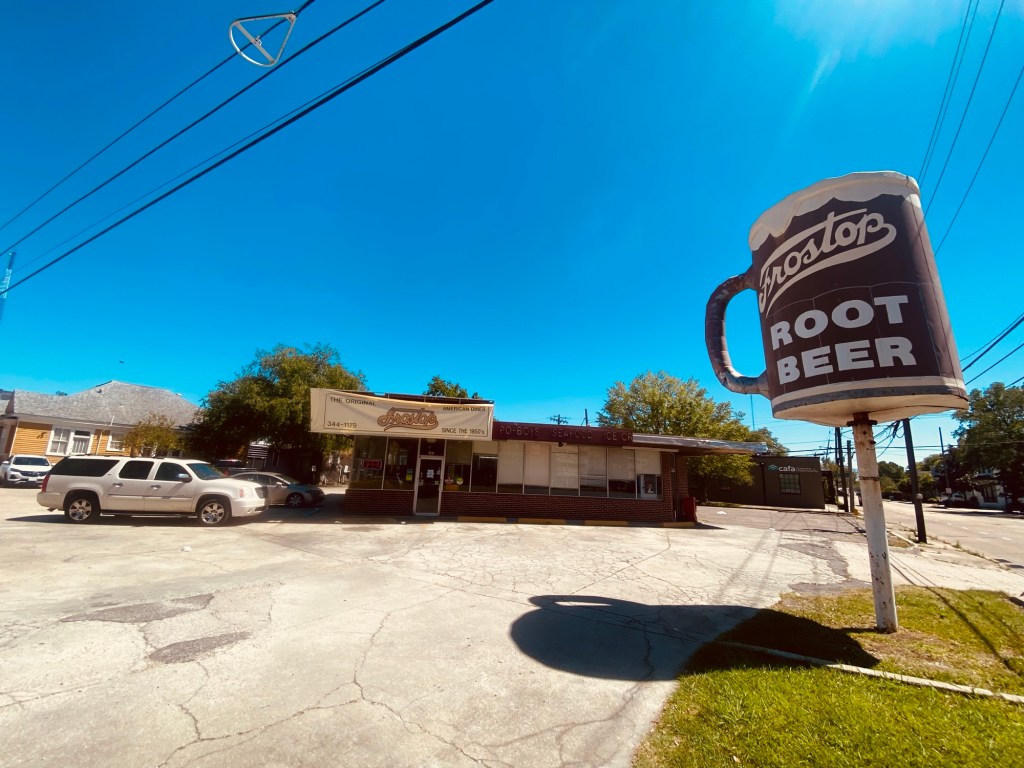
This location has seen better days. The nice way to say something about this spot is that it felt like you were stepping back into 1950 when you stepped inside. But it was more in the way that the property hadn’t been worked on in half a century. They had a mug, and it technically spun when the wind blew since it was so rusty. I can’t give a fair review of this spot because it was my third Frostop of the day and my body couldn’t take another drop of root beer. All I ordered was a chocolate malt, so it slipped my mind to investigate the authenticity of their brew. This place exists though, and has still been a staple in Baton Rouge for 70 years. They must be doing something right.
Frostop, Ashton, Idaho

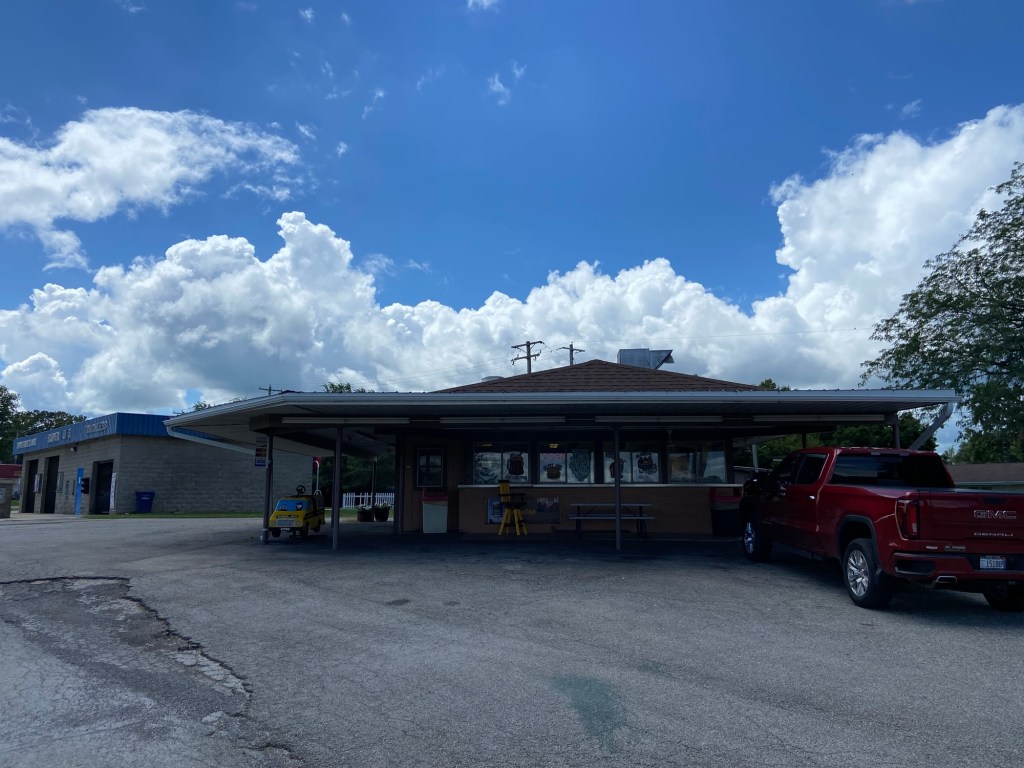
I was looking forward to this as the crown jewel of Frostops. It’s not the oldest, but it is by far the most remote location with the Grand Tetons visible in the distance. Imagine my disappointment when I order a root beer and receive Barq’s. You probably can’t imagine it, because we are talking about sugar beverages in a chain you only kinda care about. To its credit, this location still looked like a drive-in because it was a drive-in. That was a real rarity. I expected more of a reaction when I told the owner that I had driven around the country to all the Frostops. She thought there were only five locations left including one in Wisconsin and the Carolinas (there’s not), and when I told her that there were still ten she just didn’t believe me. It was a strange interaction. The only shirts they sold were women’s cut tank tops, which aided the feeling that I had stumbled into an alternate reality. They had the giant mug and a solid burger. I am certainly glad this place exists, but it did not live up to my expectations.
Riggen’s Frostop, Chrisman, Illinois

How does an ancient drive-in restaurant stay open since 1954 in a town of 1,200 people? It takes an extreme level of dedication. Restoring a building after multiple fires. Bringing your kids in as waiters. Continuing to work into your 70s. Sue has been keeping this place alive her entire life. Her mom had run the shop until she was 90, and now it is Sue’s to run. I showed up very late in the day and got my root beer and burger. It was one of the best Frostop burgers I’d had, and it was true homemade root beer. The waitress saw my Huntington Frostop shirt and went in to tell the owner (Sue). Sue rolled out and started asking me questions and she enjoyed hearing about my trip. Likewise, I enjoyed hearing about her history in the business. She gave me a hard time about not getting a root beer float, so I vowed to come back the next day for lunch. This meant rearranging my plans for St Louis and everything after that, but I wanted to match Sue’s enthusiasm. I came back the next day, and not long after I sat down, Sue came up behind me with three Frostop-branded straws. She handed them over and said, “Don’t use these—they’re paper.” Naturally, I asked, “Oh, is that some kind of state regulation?” She shook her head and said, “No, those straws are 50 years old.” Oh. Well, that explains why I shouldn’t use them.
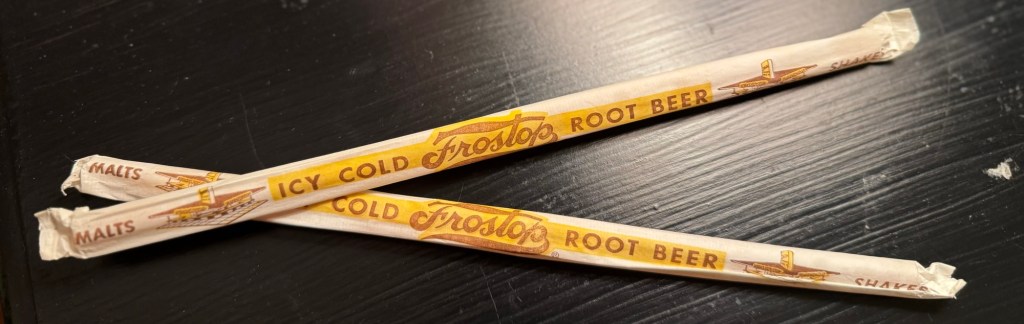
This was a great final stop. This place still had car service, and they’d kept the mug and repainted it even after it had been involved in an electrical fire. It just felt true to everything Frostop was meant to be.
Frostop, Huntington, West Virginia

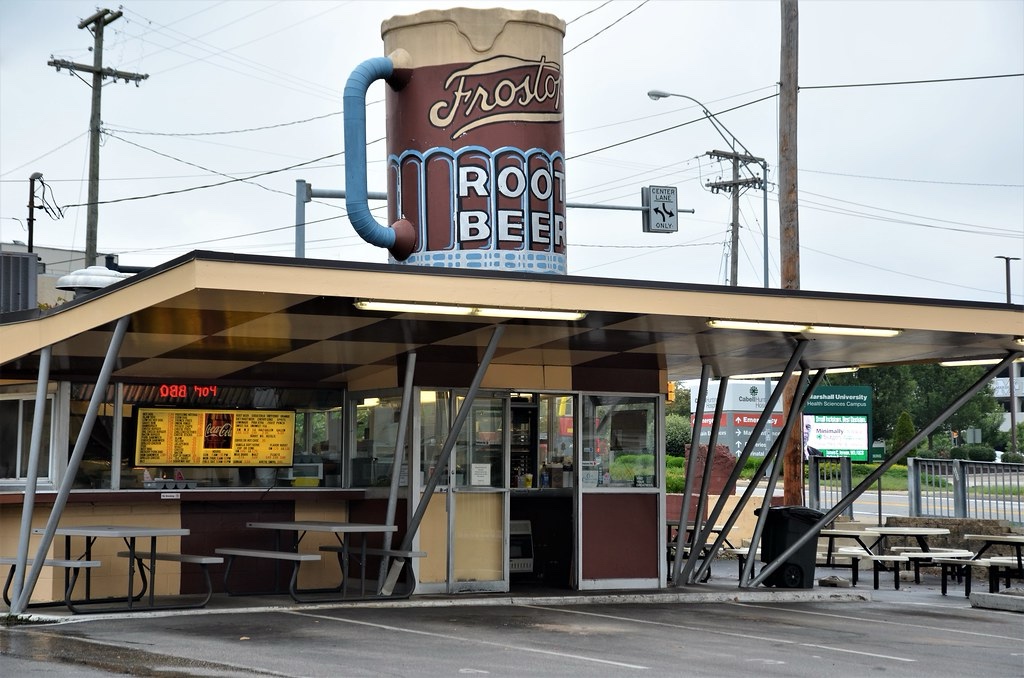
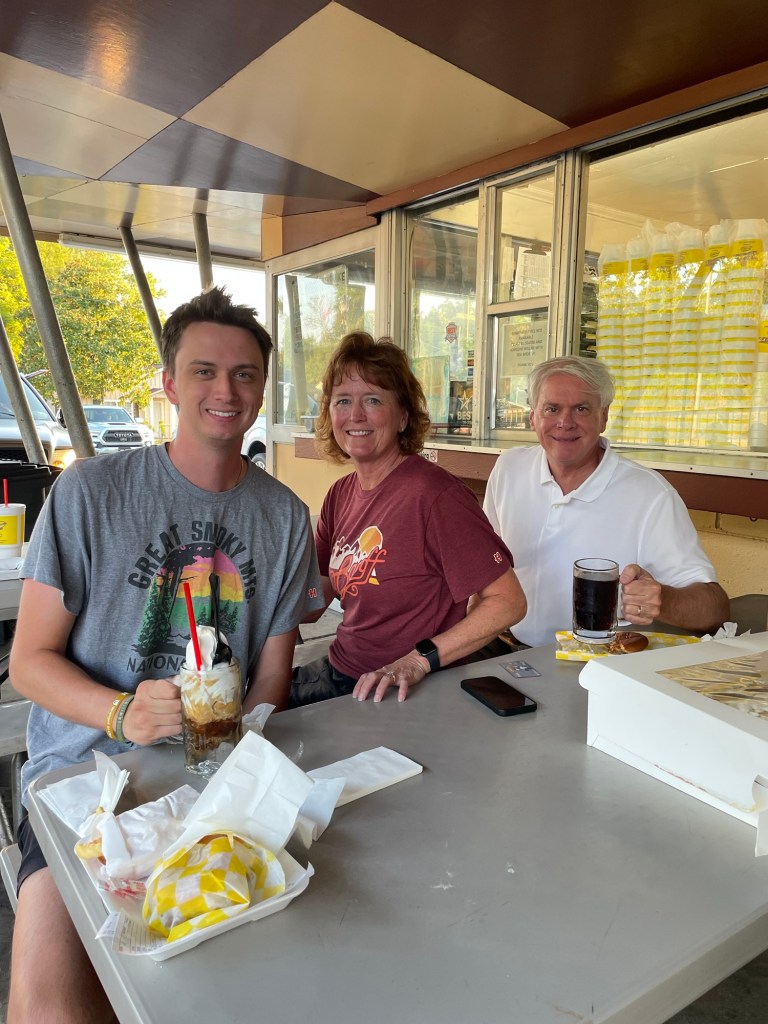
The one that started it all, at least for me. I had a stranger come up to me in a bar a month ago and ask, “you went to all the Frostops didn’t you?” What a strange thing to be known for. It turns out I was known because my arrival home from this journey had been posted on Huntington Frostop’s Facebook page. So for a couple months whenever people would go to that page to see what time Frostop closed, they would see my face, looking like I’d returned home from war. I may not have fought in the trenches, but I sure trudged through a lot of fries. We all do our part. This is the most Frostoppy Frostop. It has a spinning mug on the roof (that’s one of only two stores). It has car service (that’s one of three). It has genuine home brewed root beer (that’s one of four). It also makes its own food, stays busy, has a well-kept building, and a community that loves it. For me, this is the Frostop that all others are measured against, and the only thing that can top it… is the foam.

 Thadventure
Leave a reply to Alec Cancel reply